

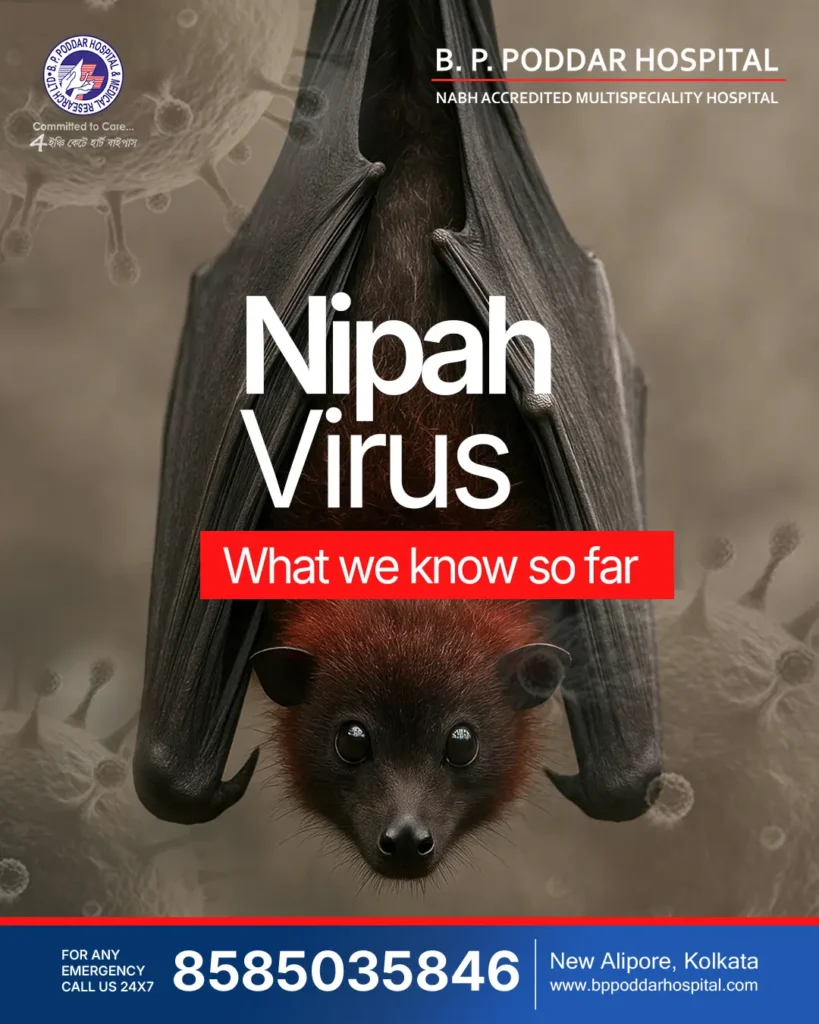
The Nipah virus (NiV) is a rare but highly serious viral infection that can affect humans and animals. It is classified as a zoonotic virus, meaning it can spread from animals to humans, and in some cases, from human to human. Due to its high fatality rate and potential to cause outbreaks, Nipah virus infection is considered a major public health concern, especially in parts of South and Southeast Asia, including India.
This detailed guide aims to educate patients, caregivers, and the general public about the Nipah virus, its symptoms, modes of transmission, diagnosis, treatment, and most importantly, prevention.
What is the Nipah Virus?
The Nipah virus belongs to the Paramyxoviridae family and was first identified during an outbreak in Malaysia in 1998–99. Fruit bats of the Pteropus species (commonly known as flying foxes) are the natural hosts of the virus. These bats often show no symptoms but can transmit the virus to humans and animals.
Nipah virus infection can cause a range of illnesses, from mild flu-like symptoms to severe respiratory illness and fatal encephalitis (brain inflammation).
How Does Nipah Virus Spread?
Nipah virus can spread through multiple routes:
Animal to Human Transmission
Consumption of fruits or fruit products (such as raw date palm sap) contaminated by infected fruit bats
Direct contact with infected animals like pigs
Human to Human Transmission
Close contact with bodily fluids such as saliva, respiratory secretions, blood, or urine of an infected person
Exposure in healthcare settings without adequate infection control
Because of this, outbreaks often require strict isolation and infection prevention measures.
Common Symptoms of Nipah Virus Infection
Symptoms typically appear 5–14 days after exposure, but in some cases, the incubation period can be longer.
Early Symptoms
- Fever
- Headache
- Muscle pain
- Sore throat
- Vomiting
Severe Symptoms
- Drowsiness or confusion
- Acute respiratory distress
- Seizures
- Encephalitis (brain swelling)
- Coma
Nipah virus can progress rapidly, and severe cases may become life-threatening within days.
Why is Nipah Virus Considered Dangerous?
- High mortality rate (reported between 40%–75%)
- No specific antiviral cure available
- Possibility of human-to-human transmission
- Risk of outbreaks in densely populated areas
- Early detection and prompt medical care are critical to improving outcomes.
Diagnosis of Nipah Virus
Nipah virus infection is diagnosed through specialized laboratory tests, usually conducted in designated reference labs. Tests may include:
- RT-PCR (Reverse Transcriptase Polymerase Chain Reaction)
- ELISA tests for antibodies
- Virus isolation in high-containment laboratories
Patients with suspected symptoms and exposure history should seek immediate medical attention.
Treatment of Nipah Virus
Currently, there is no specific antiviral treatment approved for Nipah virus infection. Management mainly focuses on:
- Supportive care
- Treatment of respiratory and neurological complications
- Intensive care support when required
Early hospitalization significantly improves survival chances.
Preventive Measures Against Nipah Virus
Prevention remains the most effective strategy.
For the General Public
- Avoid consuming raw date palm sap
- Wash fruits thoroughly and avoid partially eaten fruits
- Avoid contact with bats and sick animals
- Maintain hand hygiene
In Healthcare Settings
- Use of personal protective equipment (PPE)
- Isolation of suspected or confirmed cases
- Strict infection control protocols
Community Awareness
- Early reporting of symptoms
- Avoiding unnecessary panic while following official health advisories
When Should You Seek Medical Help?
Consult a doctor immediately if you experience: – Fever with headache and confusion – Breathing difficulty – Recent travel to or contact with a Nipah-affected area or person
Early medical intervention can be life-saving.