

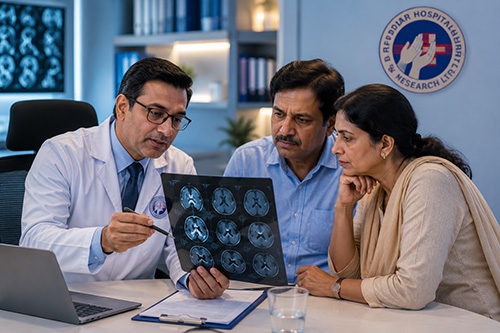
Diagnosing an ACL Injury
In order to diagnose an ACL injury, our orthopaedic and sports medicine experts will perform a physical exam to check for swelling, tenderness, stability and other signs of injury.
You may also undergo digital imaging to allow the surgeons to take a closer look at the injury. The main types of digital imaging tools include:
CT scan (CAT scan): This special study takes detailed 3D images of a bone. CT images take far more detailed images of bones than a standard X-ray.
Magnetic resonance imaging (MRI): An MRI is a common test used to see athletic injuries. Orthopaedists are able to see soft tissue such as tendons and ligaments as well as bone abnormalities.
Ultrasound: This is a safe and painless test using sound waves to produce pictures of the muscles, tendons, ligaments and other soft tissues of a joint.
X-ray: An X-ray provides detailed imaging of bones and hard structures and can be helpful in viewing whether your injury is associated with a broken bone.
Arthroscopic ACL Surgery Autograft or Allograft Tissue?
To repair the ACL, we perform arthroscopic surgery, which is less invasive and allows patients to recover more quickly. In an ACL reconstruction, the damaged ligament is replaced with a tissue graft from a donor (allograft) or your own body (autograft). The graft is passed through holes in the bone and placed in the same location as the damaged ACL. Once in place, the graft will be “anchored” to the bone using a screw or another type of implant.
An allograft tissue replacement has less pain right after surgery and provides a faster return to daily activities, but it may not be best for highly-active, competitive athletes who put more demands on their body. We use allografts from tissue banks with the highest quality tissue processing standards to ensure the best outcomes.
An autograft tissue is a more natural approach to ACL surgery because it uses your own living tissue. An autograft is a part of a tendon taken from your own hamstring or kneecap that is inserted into the knee joint to replace a torn ligament. It is less likely to re-tear (especially in athletes under 30), but requires longer recovery.
We will help you determine which type of tissue is right for you. In some cases, if you’re an older adult who’s not athletically competitive, we may recommend an allograft. If you’re a young athlete who wants to return to competitive play, chances are high you may have an autograft.