Skip to content
B. P. Poddar Hospital& Medical Research Ltd NABH accredited hospital
Read this site inTranslation by Google. For medical advice, please speak to our team.
Call us85850 35846

Endoscope

ENDOSCOPY

  • 5Services & procedures
At a glance

ENDOSCOPY

An endoscopy is a procedure that allows you to see within your body.

An endoscope is a long, thin tube with a tiny camera inside that is introduced into your body through a natural orifice such as your mouth.

If you have specific symptoms, your doctor may recommend you for an endoscopy. It is normally performed in a hospital endoscopic unit.

The sort of endoscopy you have will be determined on your symptoms.

4 services

GASTROSCOPY

What is gastroscopy?

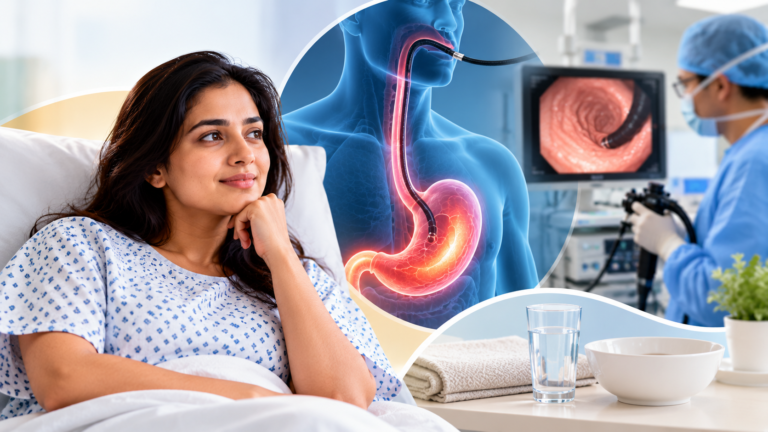
Gastroscopy, also known as upper endoscopy, is the examination of the upper digestive system with a thin flexible tube (endoscope).

To observe these places, the tube is placed into the mouth and proceeds through the food pipe (oesophagus), stomach, and first section of the small intestine (duodenum).

The endoscope has a light and video camera that sends images to a monitor where a doctor may view them.

When is a Gastroscopy needed?

Typically, a gastroscopy is performed to explore symptoms such as indigestion, nausea, or trouble swallowing. It can detect inflammation, ulcers, polyps, and other growths.

Gastroscopy is often used to treat diseases such as bleeding ulcers, to enlarge a small oesophagus (a procedure called as dilatation), or to remove a foreign material. Doctors can obtain tissue samples (biopsies) and remove polyps from anything strange they detect.

How do you prepare for a Gastroscopy?

You must have an empty stomach for a gastroscopy so that the doctor can see well and you do not vomit. You should not eat or drink anything for 6 hours before the surgery; your doctor will instruct you on the specifics before the treatment. You should also consult your doctor about when to take your normal medications and whether you have any allergies or other medical issues.

What can you expect after the procedure?

A gastroscopy is often performed under mild anaesthesia. It normally takes between 15 and 30 minutes. You may feel tired and bloated as a result of the air supplied during the test. You will most likely have no recollection of the surgery.

After the operation, you are normally permitted to eat and drink, but you should not drive, travel alone on public transportation, use machinery, sign legal papers, or consume alcohol for the following 24 hours. You should arrange for a friend or relative to drive you home. You may need to consult with your doctor about the results of your examination or any biopsy results.

1 service

COLONOSCOPY

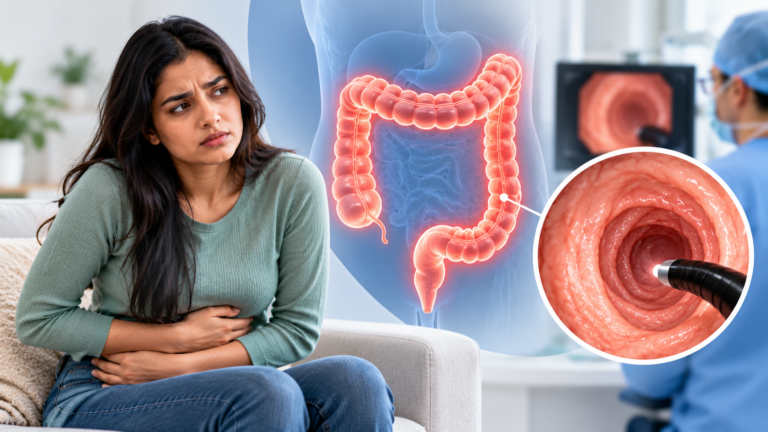
A colonoscopy (koe-lun-OS-kuh-pee) is a test that looks for abnormalities in the large intestine (colon) and rectum, such as swollen, irritating tissues, polyps, or cancer.

A long, flexible tube (colonoscope) is placed into the rectum during a colonoscopy. The doctor can see the inside of the colon thanks to a tiny video camera at the tip of the tube.

Polyps and other forms of abnormal tissue can be removed through the scope during a colonoscopy if necessary. Tissue samples (biopsies) can also be obtained during a colonoscopy.

Why it is done?

Your doctor may advise you to get a colonoscopy if you are:

Examine intestinal signs and symptoms. A colonoscopy can assist your doctor in determining the source of stomach discomfort, rectal bleeding, persistent diarrhea, and other intestinal issues.

Examine for colon cancer. If you’re 45 or older and at average risk of colon cancer (you have no other risk factors for colon cancer than age), your doctor may prescribe a colonoscopy every 10 years. If you have other risk factors, your doctor may advise you to get screened sooner. Colonoscopy is one of a few approaches for screening for colon cancer. Consult your doctor about your best alternatives.

Look for more polyps. If you’ve previously had polyps, your doctor may prescribe a follow-up colonoscopy to search for and remove any new polyps. This is done to lower your chance of developing colon cancer.

Take care of a problem. A colonoscopy may be performed for medical purposes, such as implanting a stent or removing an item from your colon.


Health blog

From our health blog

Talk to us

Not sure where to start?

Send us your question and reports. A care coordinator will call you back and book the right specialist.

  1. Fill the form
  2. We review your reports
  3. We call you back
Attach reports or prescriptionsPDF or photos, up to 5 files of 8 MB eachChoose files
We reply within working hours. Your files stay private.